

Mornings can be hectic. Between getting ready for work, preparing children for school, attending classes, managing household responsibilities, and dealing with unexpected delays, breakfast is often the meal people skip first. Some people leave home with only a cup of tea or coffee, while others grab packaged snacks because they don’t have enough time to cook.
However, a busy morning does not mean you have to compromise on a nutritious breakfast.
A healthy breakfast can be simple, quick, affordable, and delicious. You don’t need complicated recipes or expensive ingredients. With a little planning, everyday foods such as oats, eggs, fruits, vegetables, whole grains, yogurt, and nuts can become satisfying breakfast options.
In this article, we explore practical healthy breakfast ideas for busy mornings, along with simple preparation tips that can help you start your day with better eating habits.
Why Does Breakfast Matter?
Breakfast is the first major meal after the overnight fasting period. What you eat in the morning can influence how satisfied and energetic you feel during the first part of your day.
A balanced breakfast can provide important nutrients such as protein, carbohydrates, healthy fats, vitamins, minerals, and dietary fiber.
A nutritious morning meal may help you:
- Start the day with better energy
- Stay satisfied until your next meal
- Support concentration and productivity
- Add important nutrients to your daily diet
- Include more fruits and vegetables in your routine
- Avoid relying too heavily on highly processed snacks
However, there is no single “perfect” breakfast for everyone. Some people may prefer a large breakfast, while others may feel comfortable with a smaller meal. Your food choices should fit your nutritional needs, lifestyle, culture, preferences, and health requirements.
The goal is not to make breakfast complicated. The goal is to make it balanced and practical.
What Makes a Breakfast Healthy?
A healthy breakfast does not have to follow a strict recipe. Instead, think about combining a few basic food groups.
1. Include Protein
Protein can make a meal more satisfying and is important for maintaining and repairing body tissues.
Good breakfast sources include:
- Eggs
- Milk
- Yogurt
- Paneer
- Nuts and seeds
- Beans and lentils
- Peanut butter
- Sprouts
Adding a protein source can make a simple breakfast more filling.
2. Choose Whole Grains
Whole grains generally contain more fiber and nutrients than refined grains.
Examples include:
- Oats
- Whole-wheat bread
- Whole-grain cereals
- Millet-based foods
- Brown rice
- Whole-wheat roti
You can choose the grain according to your dietary preferences and local food habits.
3. Add Fruits or Vegetables
Fruits and vegetables add color, fiber, vitamins, minerals, and other beneficial plant compounds to your meal.
Bananas, apples, oranges, berries, papaya, tomatoes, spinach, carrots, cucumber, and other seasonal produce can easily be included in breakfast.
4. Don’t Forget Healthy Fats
Healthy fats can add flavor and help make meals satisfying.
Nuts, seeds, avocado, and nut butters are examples of foods containing unsaturated fats.
The key is portion size because fats are energy-dense.
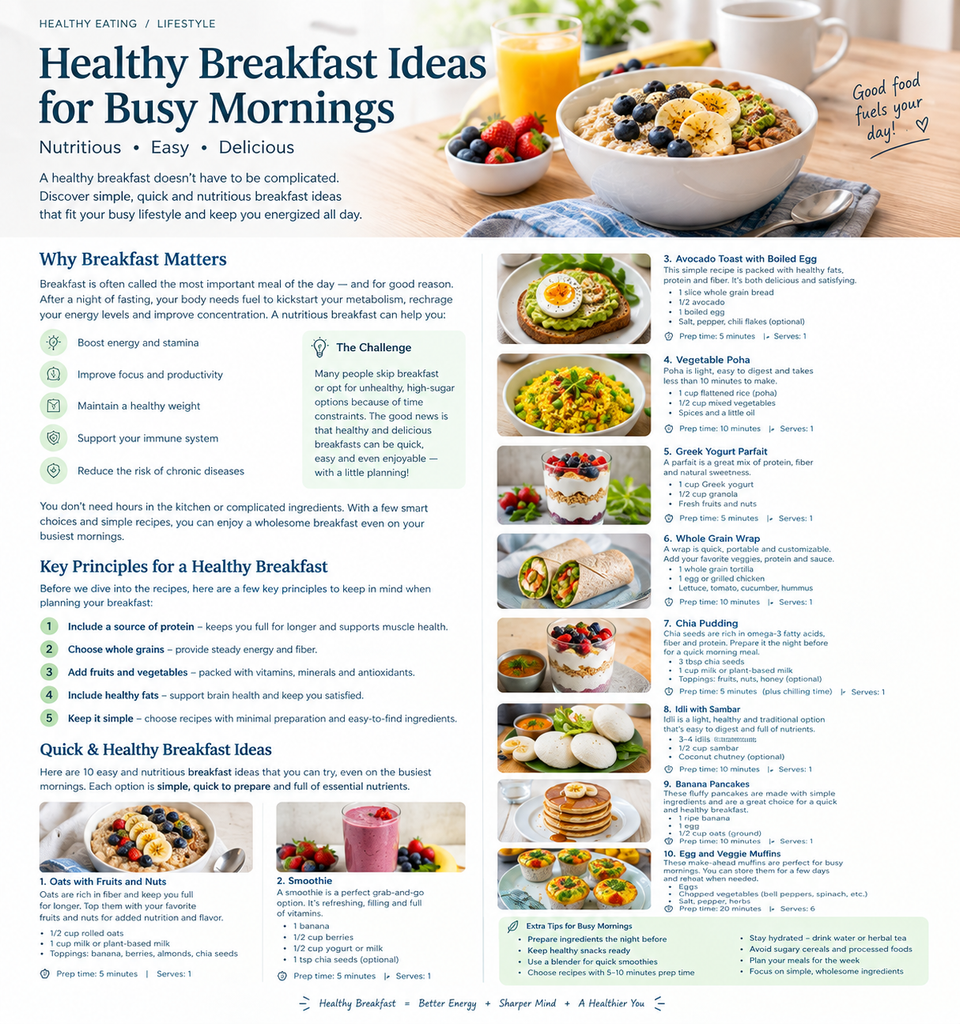
10 Healthy Breakfast Ideas for Busy Mornings
You don’t need to prepare a different complicated breakfast every day. Here are ten practical options that can be adapted to your taste and schedule.
1. Overnight Oats with Fresh Fruit
Overnight oats are useful when you know that your morning will be rushed.
Combine oats with milk or yogurt in a container and leave them in the refrigerator overnight. In the morning, add fruit and a small amount of nuts or seeds.
You can use banana, apple, berries, papaya, or another fruit you enjoy.
Why it’s convenient
There is little or no cooking required in the morning, and you can prepare it the night before.
Simple combination
Oats + milk/yogurt + fruit + nuts or seeds
Avoid turning it into a dessert by adding excessive sugar or sweet toppings.
2. Vegetable Upma
Upma can be a practical breakfast when prepared with vegetables and an appropriate amount of oil.
You can add vegetables such as carrots, peas, beans, onions, or capsicum. Adding roasted nuts or seeds can provide additional texture and nutrients.
For an even more balanced meal, you can pair vegetable upma with yogurt or another protein-rich food.
Quick preparation tip
Chop vegetables in advance and store them properly in the refrigerator. This can reduce preparation time on busy mornings.
3. Vegetable Poha
Poha is a popular and versatile breakfast option.
You can prepare it with onions, peas, carrots, beans, or other vegetables. Peanuts can add crunch and some protein and healthy fats.
A squeeze of lemon and fresh coriander can add flavor without requiring a complicated sauce.
Poha can be especially useful for people who want a light but satisfying breakfast.
4. Egg and Whole-Grain Toast
If you eat eggs, this can be one of the quickest protein-rich breakfast combinations.
Prepare a boiled egg in advance or make a simple scrambled or omelet-style egg with vegetables. Serve it with whole-grain toast and a portion of fruit.
For example:
Egg + whole-grain toast + tomato/cucumber + fruit
This combination is simple enough for a weekday morning and can be changed with different vegetables and seasonings.
People with egg allergies or dietary restrictions can replace eggs with another suitable protein source.
5. Fruit and Yogurt Bowl
A yogurt bowl requires very little preparation.
Add plain yogurt to a bowl and top it with fresh fruit, nuts, seeds, and a small portion of oats or unsweetened granola.
You can prepare the ingredients in separate containers the night before and assemble them in less than two minutes.
Choose unsweetened yogurt when possible and adjust the toppings according to your nutritional needs.
6. Healthy Breakfast Smoothie
A smoothie can be useful when you genuinely have very little time to sit down for breakfast.
Blend fruit with milk or yogurt and add ingredients such as oats, nuts, or seeds according to your preferences.
For example:
Banana + yogurt + oats + milk + a small amount of nuts
However, smoothies should not automatically be considered healthier simply because they contain fruit. Adding large quantities of sugar, syrups, sweetened powders, or other high-calorie ingredients can change the nutritional profile.
Whenever possible, use whole foods and keep added sugars limited.
7. Vegetable Sandwich
A sandwich can become a nutritious breakfast when you choose suitable ingredients.
Use whole-grain bread and fill it with vegetables such as cucumber, tomato, lettuce, carrots, and capsicum. You can add paneer, egg, hummus, or another protein source.
Instead of relying heavily on mayonnaise or highly processed sauces, experiment with yogurt-based spreads, hummus, herbs, or simple homemade chutneys.
This is also an excellent option for people who need breakfast that can be carried to work or college.
8. Idli with Sambar
Traditional Indian breakfasts can be nutritious and convenient.
Idli paired with sambar provides a combination of grains and pulses, while sambar can also contribute vegetables and protein.
You can prepare the batter in advance, making morning cooking much easier.
Add vegetables to the sambar whenever possible, and adjust the portion according to your appetite and nutritional requirements.
Traditional foods don’t need to be replaced with trendy “health foods.” The healthiest choice is often a balanced version of familiar foods.
9. Besan Chilla with Vegetables
Besan, or gram flour, can be used to prepare a quick savory pancake.
Mix besan with water and add chopped onions, tomatoes, coriander, spinach, or other vegetables. Cook it on a pan with a suitable amount of oil.
You can serve it with yogurt or a homemade chutney.
This is a useful option when you want a savory breakfast that includes a source of plant protein.
10. Banana and Peanut Butter Toast
When you have almost no time to cook, whole-grain toast topped with peanut butter and banana can be a simple option.
The bread provides carbohydrates and fiber, while peanut butter contributes protein and fats. Banana adds natural sweetness and other nutrients.
Choose peanut butter without excessive added sugar or salt when possible.
If you have a peanut allergy, use an appropriate alternative such as another nut or seed butter.
How to Make Healthy Breakfasts Faster
The biggest challenge isn’t always cooking. Often, it is preparation.
A few simple habits can save considerable time.
Prepare the Night Before
Wash fruits, chop vegetables, prepare overnight oats, boil eggs, or organize ingredients before going to bed.
Even five to ten minutes of preparation can make the next morning easier.
Keep Basic Ingredients Available
A well-organized kitchen makes healthy choices easier.
Useful ingredients include:
- Oats
- Eggs
- Whole-grain bread
- Yogurt
- Seasonal fruits
- Vegetables
- Nuts and seeds
- Milk
- Lentils and pulses
- Peanut or seed butter
You don’t need to buy everything. Keep the foods your family actually eats and enjoys.
Cook in Batches
Some breakfast components can be prepared in larger quantities.
For example, you can prepare a batch of vegetable mixture, chutney, boiled eggs, or dosa/idli batter and use them over several days, provided they are stored safely and consumed within an appropriate period.
Meal preparation doesn’t mean eating the exact same meal every day. You can reuse ingredients in different combinations.
Keep Emergency Breakfast Options
Some mornings will simply go wrong.
Maybe you wake up late, your child misses the bus, or an unexpected work call changes your schedule.
Keep a few simple options available, such as:
- A banana and a handful of nuts
- Yogurt with fruit
- Whole-grain toast with nut or seed butter
- A boiled egg and fruit
- Homemade vegetable sandwich
Having a backup option can reduce the temptation to skip breakfast completely or depend on highly processed foods.
Breakfast Mistakes to Avoid
Trying to eat a healthy breakfast doesn’t mean you need to follow strict rules. However, some common habits are worth reconsidering.
Skipping Breakfast Because You Are Busy
If you are not hungry in the morning, you don’t necessarily have to force yourself to eat a large meal. But if you regularly become extremely hungry later in the morning and end up choosing less nutritious foods, planning a small breakfast may help.
Relying on Sugary Foods
Sweetened cereals, pastries, biscuits, desserts, and heavily sweetened drinks may provide quick energy but are not necessarily balanced breakfast choices.
Try pairing carbohydrates with protein, fiber, and other nutrient-rich foods.
Drinking Only Tea or Coffee
Tea and coffee can be part of a morning routine, but they don’t provide everything your body needs from a balanced meal.
If you usually have only tea or coffee, consider adding a simple food option such as fruit, yogurt, eggs, oats, or whole-grain toast.
Choosing “Healthy” Packaged Foods Without Checking Labels
Words such as “natural,” “multigrain,” or “healthy” on packaging don’t automatically mean a product is nutritionally ideal.
When buying packaged breakfast foods, check the nutrition information and ingredient list. Pay attention to added sugars, sodium, fiber, protein, and portion size.
Is Indian Breakfast Healthy?
Indian cuisine offers a wide variety of breakfast choices, and many traditional foods can fit into a balanced diet.
Options such as idli, dosa, poha, upma, vegetable uttapam, pesarattu, chapati, and other regional foods can be adapted according to individual nutritional needs.
The overall meal matters more than labeling one food as simply “good” or “bad.”
For example, adding vegetables and a protein-rich accompaniment can make a carbohydrate-focused breakfast more balanced.
Portion sizes, cooking methods, ingredients, and individual health requirements should also be considered.
A Simple 7-Day Breakfast Plan
Here’s an example of how you can add variety without making mornings complicated:
Monday: Vegetable poha + yogurt + fruit
Tuesday: Oats with banana, nuts, and milk
Wednesday: Vegetable omelet + whole-grain toast + fruit
Thursday: Idli + vegetable sambar
Friday: Besan chilla + yogurt + vegetables
Saturday: Vegetable sandwich + fruit
Sunday: Vegetable upma + boiled egg or another protein-rich option
This is only an example. You can swap meals according to your preferences, available ingredients, culture, budget, and nutritional requirements.
Breakfast on Different Types of Busy Mornings
Not every busy morning looks the same.
For Students
Students may benefit from breakfast options that are quick to prepare and provide sustained energy for classes. Oats, eggs, idli with sambar, poha, or a yogurt-and-fruit bowl can be practical choices.
For Office Workers
If you have a long commute, portable breakfasts such as sandwiches, overnight oats, fruit, yogurt, or homemade wraps can be convenient.
For Parents
Parents can save time by preparing ingredients the night before and creating breakfast combinations that work for both adults and children.
For Older Adults
Older adults may have different nutritional requirements or medical conditions. Breakfast choices should be adjusted based on individual needs and advice from a healthcare professional or registered dietitian when appropriate.
Make Breakfast a Sustainable Habit
The best breakfast plan is not the one that looks perfect on social media. It is the one you can realistically maintain.
You don’t need expensive superfoods, elaborate recipes, or a completely different diet.
Start with a simple formula:
One source of protein + one whole-grain or other carbohydrate source + fruit or vegetables + a suitable amount of healthy fat.
Then adjust it to your lifestyle.
If you have only five minutes, choose a five-minute breakfast. If you have more time on weekends, prepare ingredients for the week.
Consistency matters more than perfection.
When Should You Seek Professional Nutrition Advice?
General healthy eating advice is useful for most people, but some individuals need personalized guidance.
Consider speaking with a doctor or qualified dietitian if you have a medical condition, food allergy, digestive concerns, significant unexplained weight changes, or specific dietary requirements.
People with conditions such as diabetes, kidney disease, high blood pressure, or other chronic illnesses may need individualized meal planning.
Children, pregnant women, older adults, athletes, and people recovering from illness may also have specific nutritional needs.
Avoid following restrictive diets or making major dietary changes based solely on social media trends.
Final Thoughts
Busy mornings don’t have to mean unhealthy breakfasts.
With simple ingredients and a little preparation, you can create nutritious meals that fit even demanding schedules. From overnight oats and fruit bowls to vegetable poha, idli with sambar, egg toast, besan chilla, and homemade sandwiches, there are countless ways to make breakfast both convenient and enjoyable.
The most important step is to start with realistic changes.
Prepare something the night before. Keep fruit within easy reach. Add vegetables to a familiar recipe. Include a protein source. Choose whole grains more often. Keep a quick backup breakfast available for particularly hectic mornings.
A healthy breakfast doesn’t have to be perfect. It simply needs to be a practical part of an overall balanced lifestyle.
Start your morning with a better choice, one meal at a time.